
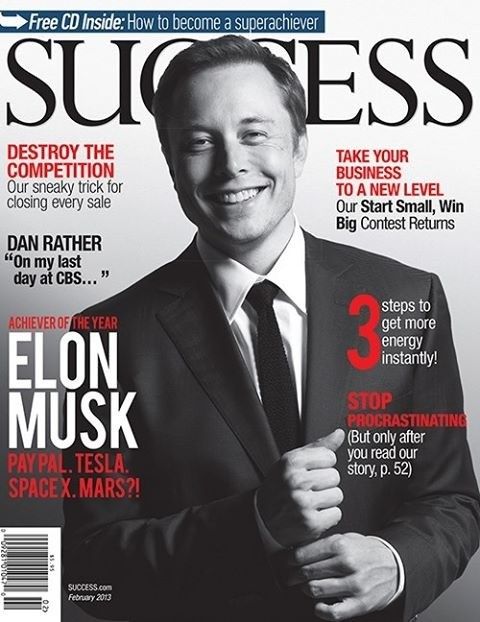

Elon Musk is a prominent businessman and entrepreneur, best known as the CEO of Tesla and SpaceX, and the owner of the social media platform X (formerly Twitter). As of October 2025, he is the wealthiest person in the world, with an estimated net worth of around $500 billion.
By seeing all this amount he owns, you can wonder and ask yourself if he was born like other babies. Elon Musk was born on June 28th, 1971 in Pretoria, South Africa, where he developed an early interest in computers and technology before moving to North America for his education and entrepreneurial pursuits. He was born from a Canadian mother (Maye Musk, a model and dietitian) and a South African father (Errol Musk, an engineer),Elon Musk grew up in a wealthy household not as other rich people who say that they came from poor families. At his young age, Elon Musk was a remarkable child that by only 12 he had sold his first video game, “Blastar,” for approximately $500.
Musk attended elite schools in South Africa, including Pretoria Boys High School. At age 17, in 1988, he left South Africa for Canada to avoid mandatory military service in the apartheid-era military and to seek better economic opportunities in the United States. later, he was transferred to the University of Pennsylvania, where he earned dual degrees in physics and economics. He co-founded Zip2 and X.com (which became PayPal) before founding SpaceX and becoming CEO of Tesla. Musk has since founded Neuralink and The Boring Company, co-founded OpenAI, and acquired Twitter, rebranding it as X.

Here are ways how Elon Muskk’s hard workimg redefines the possible;
The first is the power of working like hell. Elon believs in harrd working than any other thing. For teens, while balancing school, friends, and family is crucial, Musk’s example teaches that extraordinary results require extraordinary effort. Success doesn’t often happen with a 9-to-5 mindset. It’s about a deep commitment and a willingness to put in the extra hours when others are taking time off. He once said, “If other people are putting in 40 hour workweeks and you’re putting in 100 hour workweeks, then even if you’re doing the same thing, you know that you will achieve in four months what it takes them a year to achieve”. This highlights the compounding power of consistent, hard work.
The second is the Art of Asking “Why?” (First Principles Thinking). Musk approaches problems not by looking at what others have done (reasoning by analogy), but by breaking them down to their most fundamental truths—a method called first principles thinking.Instead of accepting the status quo or simply copying others, teens can learn to question assumptions. When starting SpaceX, people assumed rockets had to be incredibly expensive. Musk asked: “What are rockets actually made of?” and “How much do these materials cost on the commodity market?”. He discovered the raw materials were a fraction of the cost, leading him to build rockets himself and revolutionize the aerospace industry. This encourages young people to be innovators, not just imitators.
The last but not the least is Embracing Failure as a Stepping Stone. Musk’s journey has been anything but smooth. Early SpaceX rocket launches failed spectacularly, and Tesla nearly went bankrupt multiple times in its early days. Yet, he persists.Failure is not the end; it’s a necessary part of innovation. Musk has famously stated, “Failure is an option here. If things are not failing, you are not innovating enough”. This mindset encourages resilience and teaches that setbacks are valuable learning experiences. The ability to bounce back from defeat with renewed determination is a key quality that teens can cultivate.

Ultimately, Elon Musk’s story is a testament to the power of a clear vision and relentless execution. He is not defined by his wealth, but by his unwavering commitment to solving “hard” problems those that genuinely impact the future of humanity. From electrifying transportation to making humanity multi-planetary, Musk demonstrates that innovation demands ambition, resilience in the face of failure, and an extreme work ethic. For any young person reading his story, the takeaway is clear: identify a problem you care deeply about, approach it with first-principles thinking, and be prepared to put in the immense effort required to make the impossible possible. The future, as Musk consistently proves, belongs to those bold enough to build it.